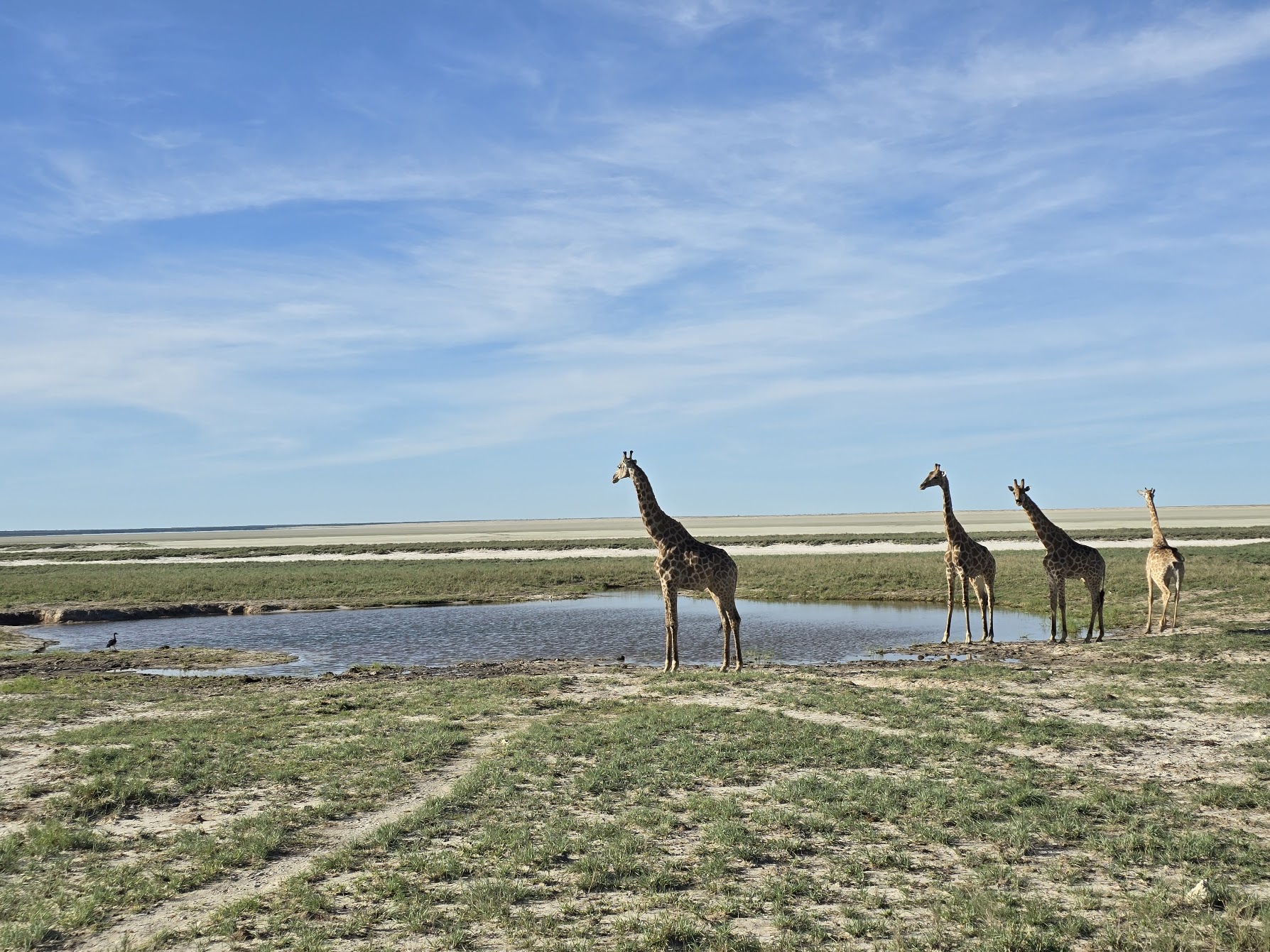
2 days in Etosha National Park
The best time to visit would be in the dry season, which is from July to October. Of course, we chose January to visit — bang in the middle of the wet season (November to April).
Unfortunately, with climate change in our lives now, the story was very different.
It reached 39 degrees during both our days there and not a single drop of rain! In fact, no rain in our entire 2-week trip. No A/C in our car could stop us from sweating continuously. In a lucky(?) turn of events, this meant we saw 3 out of the big 5!
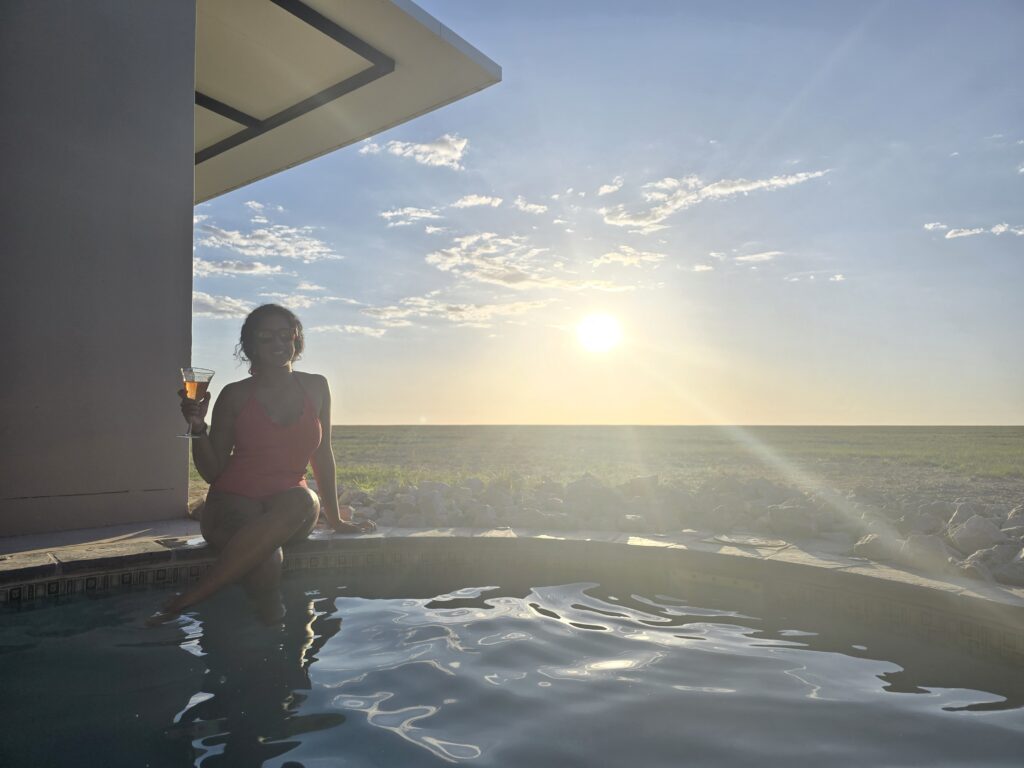
Our stay for three nights was at Etosha King Nehale, in the north of the park, 5 hours from Windhoek. As it was our first taste of our ‘African experience’, it felt out of this world. The stay included our own pool (ice cold and with a few dead bugs in it), being totally awe-struck by the endless horizon and fried crickets as a starter.
The lodges we stayed at have a collection all over Namibia: https://gondwana-collection.com
Coming from a concrete jungle, I had never seen so many stars in my life. Have I mentioned Namibia has one of the world’s best stargazing opportunities? I was really excited to use an app called Stellarium to identify all the satellites and stars, but I was also a bit disappointed that there weren’t as many UFOs as I had imagined.
It was a good start.
Day One: Highlights of our self-drive trip
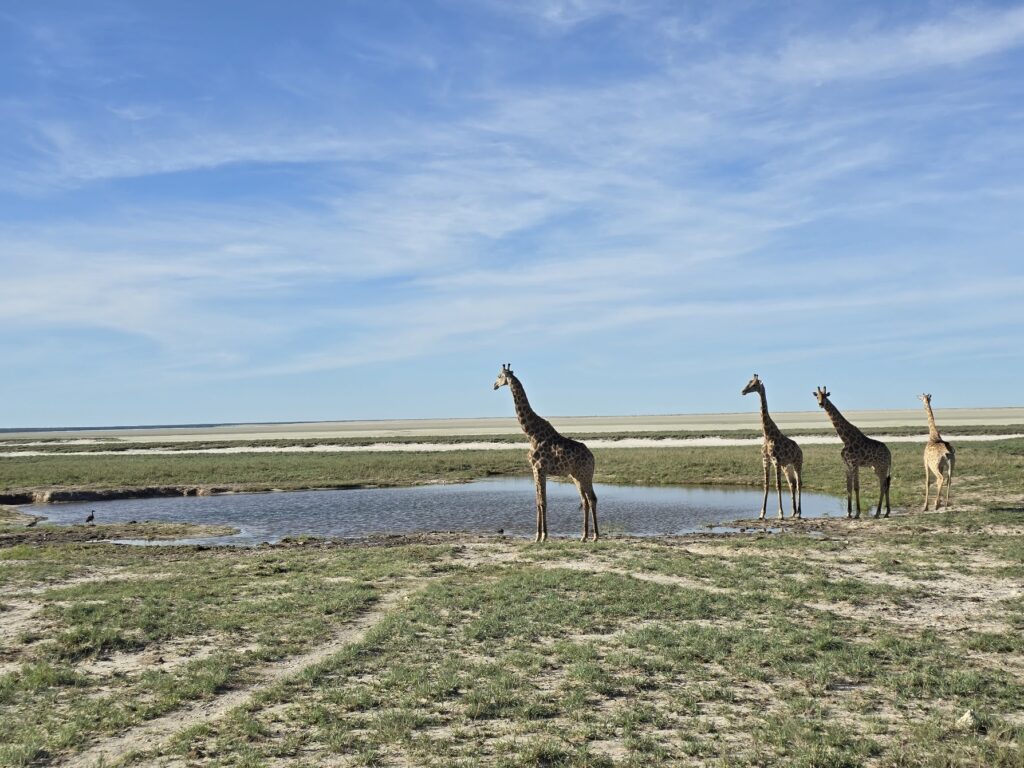
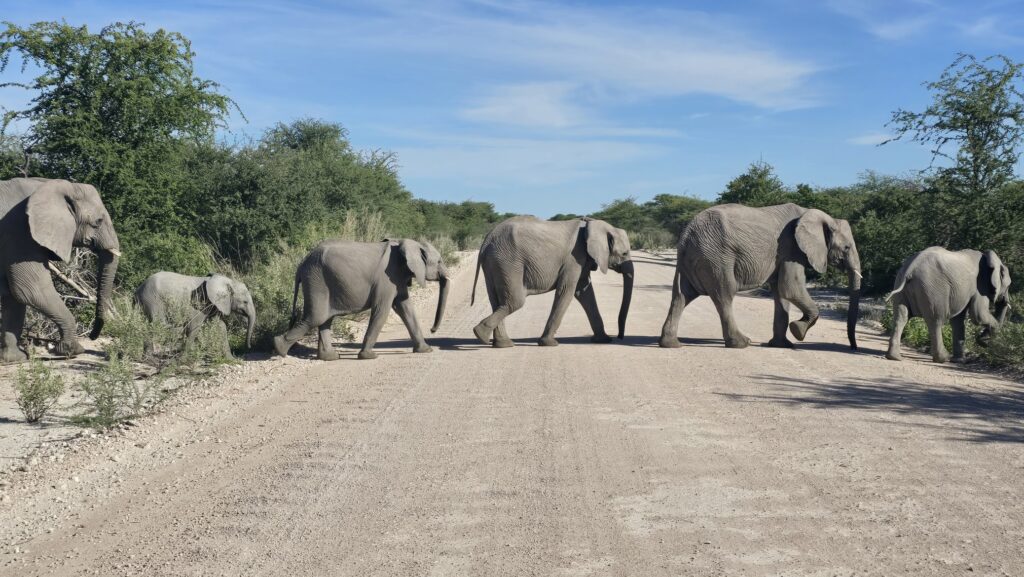
Being in the off season, there were literally no other jeeps on the road. We could see endless numbers of giraffes, wildebeest, herds of elephants, at our own pace, without battling for a spot or scaring the animals away (we bought binoculars at Windhoek)
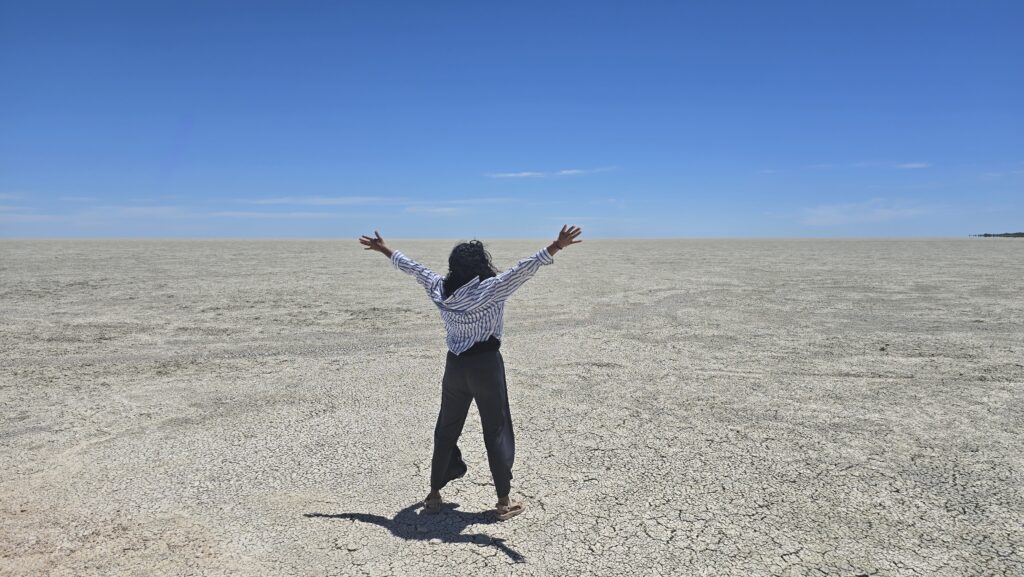
Etosha salt pan lookout near Halali was especially other-worldly. The vastness of it all makes you feel so small in comparison.
On our last stretch of driving out of the park, we managed to spot the elusive cheetah ourselves. This is where we did have 7 jeeps join us and watch, however…
Things to consider: it was especially exhausting to plan and drive ourselves to different watering holes/campsites. Bear in mind, you must leave the park by sunset and planning for time was not so straightforward. The best spots to find specific animals are easily found if you can get a map- all the details are on there. Another way for details is to chat to other drivers you’ll past by!
It was hot and because we were sitting in an aluminium can, it felt like we were roasting. You can’t open the windows because a) the roads are dusty b) cheetahs might pounce from the bushes. All part of the experience, I guess?
Day Two: Highlights of having a guided tour
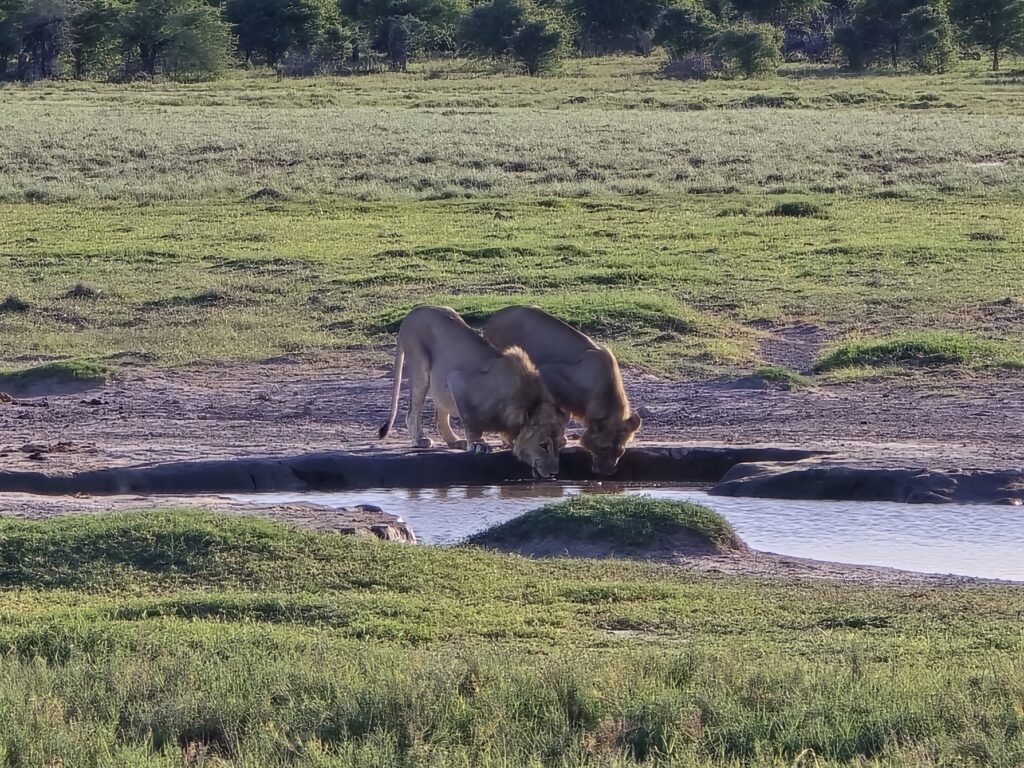
I would recommend this. The guides know everything. They know where to go, have ultra insane eyesight (what looked like a splodge to me in the distance was a lioness to him) and have all the knowledge about the animals. Most importantly, you are not so exhausted at the end of the day. Our animals tally included a set of lion brothers and another set of lioness sisters!
However, we didn’t get to catch what the park was very famous for: the endangered black rhino. No worries, the guide was well equipped with their local rum for me to drown my sorrows.
Overall, even if you have one whole day, I would recommend doing both types of trips for the different types of experiences you’d get.